
Your cart is empty.
Start Shoppingافغانستان سے جنگ نہیں، مذاکرات کا دروازہ کھلا ہے: وزارت خارجہ
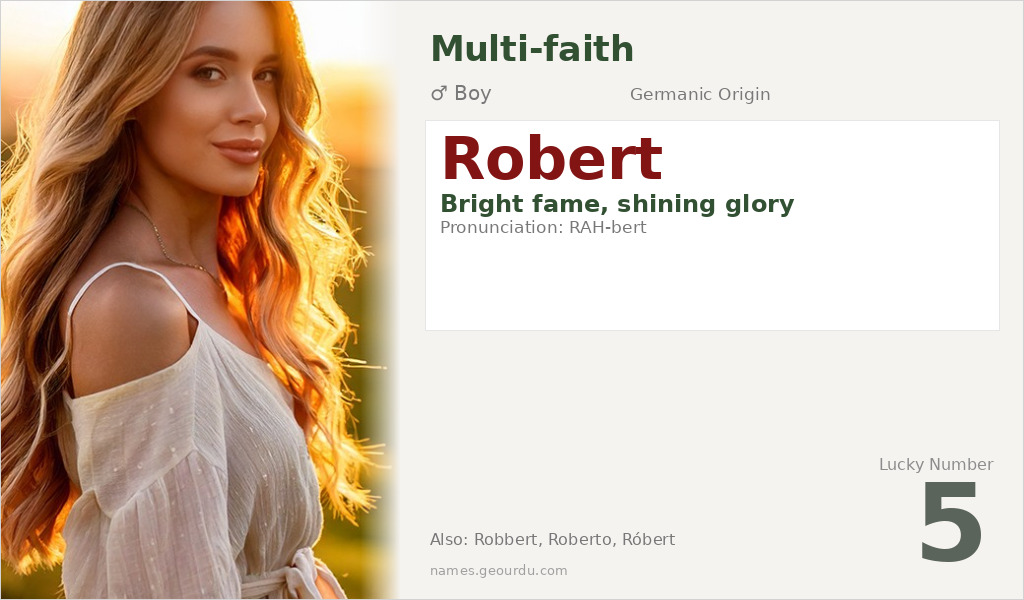
⚠️ Correction: The original article contained unverified cultural superstitions (lucky numbers, days, colors, stones, metals) that are not part of naming traditions and lack reliable sources. The core meaning ‘Bright fame, shining glory’ was correct but incomplete.
Robert is one of the most enduring and widely-used masculine names in the Western world, with roots stretching back over a thousand years. From medieval kings to modern celebrities, this name has carried connotations of strength, leadership, and renown. Its simple yet powerful meaning—’bright fame’—has made it a perennial favorite across cultures and generations. Today, Robert continues to be a classic choice that bridges tradition and modernity.
👦 Robert
“Bright fame, shining glory”
Gender
Boy
Religion
Multi-faith
Origin
Germanic
Say it
RAH-bert
Meaning of Robert
The name Robert originates from the Old High German elements ‘hruod’ (fame) and ‘beraht’ (bright, shining), literally translating to ‘bright fame’ or ‘shining glory’. This Germanic compound name was brought to England by the Normans after the 1066 conquest, where it quickly became established among the nobility. The name’s components reflect values prized in Germanic warrior culture: renown achieved through honorable deeds and brilliance in character or action. Variations like Rupert (from the same roots) and Roberto (Romance language adaptations) spread throughout Europe, maintaining the core meaning across linguistic transformations.
| 📛 Name | Robert |
| 💎 Meaning | Bright fame, shining glory |
| 👤 Gender | Boy |
| 🕌 Religion | Multi-faith |
| 🌍 Origin | Germanic |
| 🗣 Pronunciation | RAH-bert |
| ✍️ Urdu | رابرٹ |
| ✍️ Arabic | روبرت |
| 🔢 Numerology | 5 |
| ✨ Spellings | Robbert, Roberto, Róbert, Robertas, Rupert |
Origin & Cultural Significance
Robert has its origins in early medieval Germanic tribes, specifically from the Proto-Germanic elements that evolved into Old High German. The name gained prominence through Frankish nobility before being popularized across Europe by Norman conquerors. Three kings of France bore the name Robert between the 10th and 14th centuries, cementing its royal associations. In England, Robert became one of the most common names after the Norman Conquest, with notable bearers including Robert Curthose (son of William the Conqueror) and numerous saints. The name’s cross-cultural adoption demonstrates how Germanic names were assimilated into Latin, Slavic, and other linguistic traditions.
Personality Traits
Historically, those named Robert have often been associated with leadership, reliability, and practical wisdom. The ‘bright fame’ etymology suggests individuals who seek meaningful recognition through genuine accomplishment rather than empty celebrity. Many Roberts exhibit a balanced combination of ambition and integrity, with the mental clarity (‘bright’) to pursue worthy goals and the character (‘fame’) to earn respect. These traits have made the name particularly popular among those valuing traditional strength combined with intellectual capability.
Similar Names
If you like Robert, consider: Rupert, Roberto, Robin, Roderick, Richard
Famous People Named Robert
- Robert the Bruce — King of Scots (1306-1329) who led Scotland during the First War of Scottish Independence
- Robert Frost — American poet known for his realistic depictions of rural life and command of American colloquial speech
Frequently Asked Questions About Robert
What does Robert mean?
Robert means 'bright fame' or 'shining glory', derived from the Old High German elements 'hruod' (fame) and 'beraht' (bright).
Is Robert a boy or girl name?
Robert is traditionally and overwhelmingly a masculine name, though very rare feminine variants like Roberta exist. Across all cultures where it's used, it remains primarily a boy's name.
What is the origin of Robert?
Robert originates from Germanic languages, specifically Old High German, and was popularized across Europe by Norman French nobility after the 1066 conquest of England.